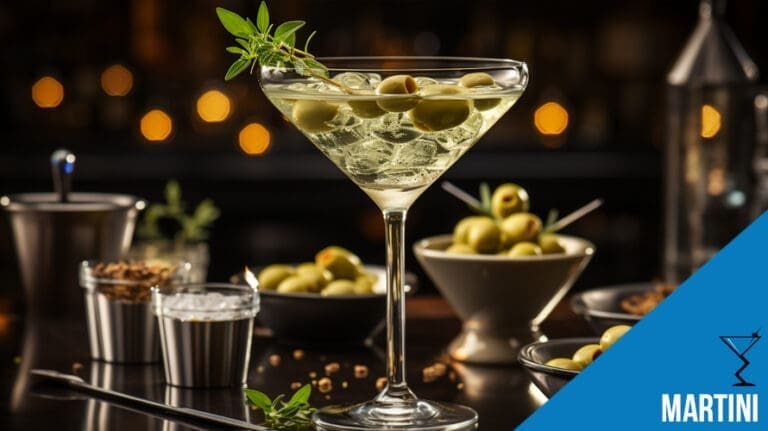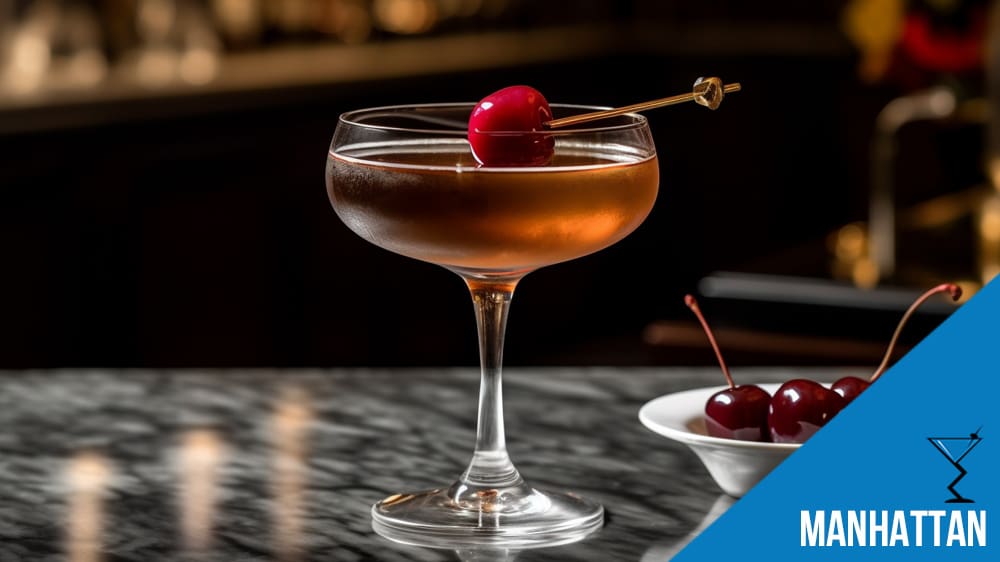
Ingredients
- 2 ¾ oz Gin
- ¾ oz Dry Vermouth
- Lemon twist or olives for garnish
Instructions
Combine Ingredients:
- In an ice-filled mixing glass or shaker, combine the gin and dry vermouth.
Stir Vigorously:
- Stir vigorously for 15 seconds to chill and mix.
Strain:
- Strain into a chilled coupe or Martini glass.
Garnish:
- Garnish with a lemon twist or olives and enjoy.
Notes
Estimated Nutrition:
Where it came from
Disputed origins. Knickerbocker Hotel in New York is the most-cited birthplace, around 1911, attributed to bartender Martini di Arma di Taggia. Earlier candidates exist: Julio Richelieu in Martinez California (1860s), the Pine Bluff Hotel (1880s), and the Manhattan-cocktail evolution narrative. Pick your favourite.
The Martini went through ratio drift over the 20th century. Early Martinis were 1:1 gin to vermouth, even sweeter. By the 1950s the standard was 4:1. By the 1980s some bars were doing 12:1 or just waving the vermouth bottle near the glass. The pendulum has swung back: modern bars typically do 5:1 or 4:1.
What it tastes like
Cold gin with a hint of dry vermouth's herbal-bitter character. Drinks almost like spirit-only with aromatic complications. The lemon twist or olive garnish provides aroma and a small shift in flavour.
Stirred is the canonical method (gives a clear, silky drink). Shaken (the Bond way) bruises the gin slightly, adds tiny ice shards, and feels more aerated. Both are correct depending on what you want.
The technique
75ml gin, 15ml dry vermouth, optional 1 dash orange or lemon bitters. Stir with ice for 30 seconds in a mixing glass. Strain into a chilled coupe or Nick and Nora. Garnish with a lemon twist (express the oils over the surface) or 1 to 3 olives on a pick.
Use very cold gin (freezer cold) and fresh vermouth. Vermouth is wine; once opened it goes off in the fridge after 4 to 6 weeks. A Martini made with old vermouth is a sad Martini.
Drink Buddy Exclusive
Tell us what's in your cabinet.
Our Cocktail Builder takes whatever bottles you've got and hands you every drink you can actually make tonight.
Get the Drink Buddy newsletter
One drink, one tip, one Tuesday a month.
Plus the recipes we drop before they hit the site. Zero spam.
Ingredient Spotlight
The bottles that make or break this drink.
The gin
- Use
- London Dry (Tanqueray, Beefeater, Plymouth, Sipsmith)
- Try
- Navy strength gin (Plymouth Navy, Tanqueray No. Ten) for more weight
- Why
- London Dry is the canonical match. Higher proof gins hold up to dilution.
The vermouth
- Use
- Dolin Dry, Noilly Prat Original Dry, Carpano Dry
- Skip
- Old vermouth that has been on the shelf for months
- Why
- Vermouth is wine. Fresh and refrigerated is essential.
The garnish
- Use
- Lemon twist (citrus oil aroma) or olive on a pick
- Try
- A pickled onion (now it's a Gibson)
- Why
- The garnish provides aroma. Lemon twist for a brighter Martini, olive for a savoury one.
Variations
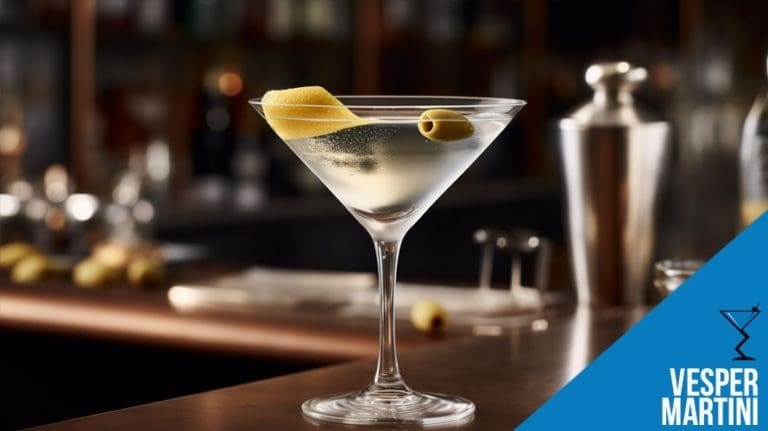
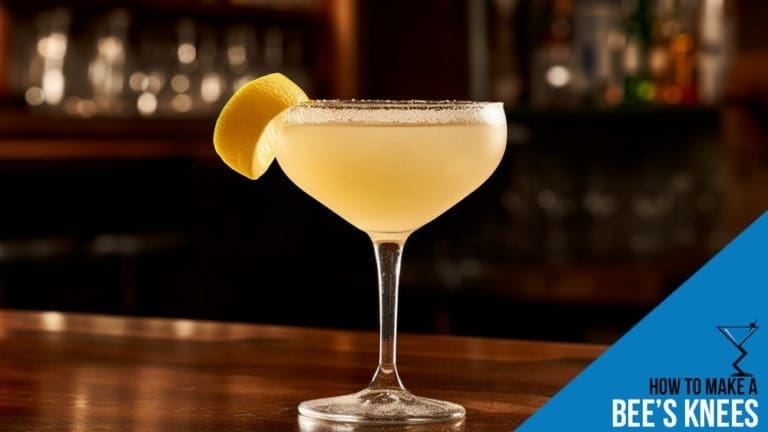
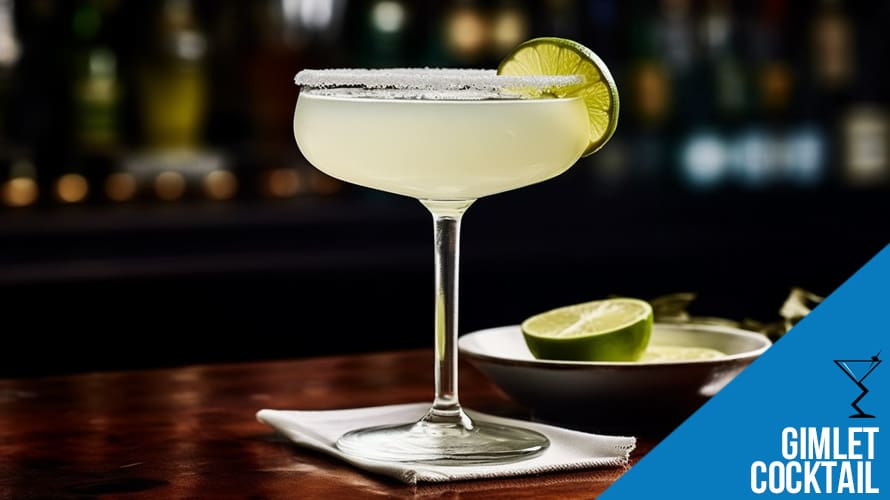
Other Martini family classics: Vesper, Gibson, Dirty Martini, and friends.



What if I don't have…
Quick substitutions for when the bottle shop is closed.
Lillet Blanc or Cocchi Americano (closer to a Vesper). White wine plus a few drops of bitters in an emergency.
Vodka makes a Vodka Martini (the Bond default). Cocchi Americano makes a Reverse Martini.
Add 5 to 15ml of olive brine. Now it's a Dirty Martini.
Use sweet vermouth instead of dry. Now it's a Sweet Martini.
Pour 75ml gin into the chilled glass and waft the vermouth bottle near it. Or add a single drop of vermouth. The Churchill Martini.
Frequently Asked Questions
Direct answers to what people search for after Googling this drink.
What is in a Dry Martini?
Gin and dry vermouth, stirred with ice, strained into a chilled glass, lemon twist or olive. Standard modern spec: 75ml gin, 15ml dry vermouth, optional 1 dash orange bitters.
How do you make a Dry Martini?
Stir 75ml gin and 15ml dry vermouth with ice in a mixing glass for 30 seconds. Strain into a chilled coupe. Express a lemon peel over the surface, or drop in 1 to 3 olives on a pick.
Where did the Martini come from?
Disputed. The Knickerbocker Hotel in New York around 1911 is the most-cited origin, attributed to Martini di Arma di Taggia. Earlier claims exist in California and the Manhattan-evolution narrative.
Should a Martini be shaken or stirred?
Stirring produces a clear, silky drink. Shaking (the Bond preference) bruises the gin slightly, adds tiny ice shards, and aerates. Both are correct. Shaking shifts the texture and slightly the flavour.
What ratio is correct?
Modern standard is 5:1 to 4:1 gin to vermouth. The 19th-century original was 1:1. Mid-century drinkers pushed to 12:1. Pick the ratio that matches your palate.
Olive or lemon twist?
Lemon twist makes the drink brighter and more aromatic. Olive makes it savoury and mildly briny. Both are canonical.
Dry Martini vs Vesper?
Vesper adds vodka and uses Lillet Blanc instead of dry vermouth. Drinks rounder and slightly sweeter than a Dry Martini.
How strong is a Dry Martini?
About 30 to 35 percent ABV in the glass after dilution. Stiff. The lemon twist or olive provides the only break from pure spirit.
What gin should I use?
London Dry: Tanqueray, Beefeater, Plymouth, Sipsmith. High-proof gins (Plymouth Navy) hold up better to dilution.
What glass should I use?
A coupe or Nick and Nora. The classic V-shape Martini glass works but warms the drink fast (large surface area). Smaller is better.
More Like This
More stirred cocktails when small-and-cold is the only correct answer.